
Project Overview
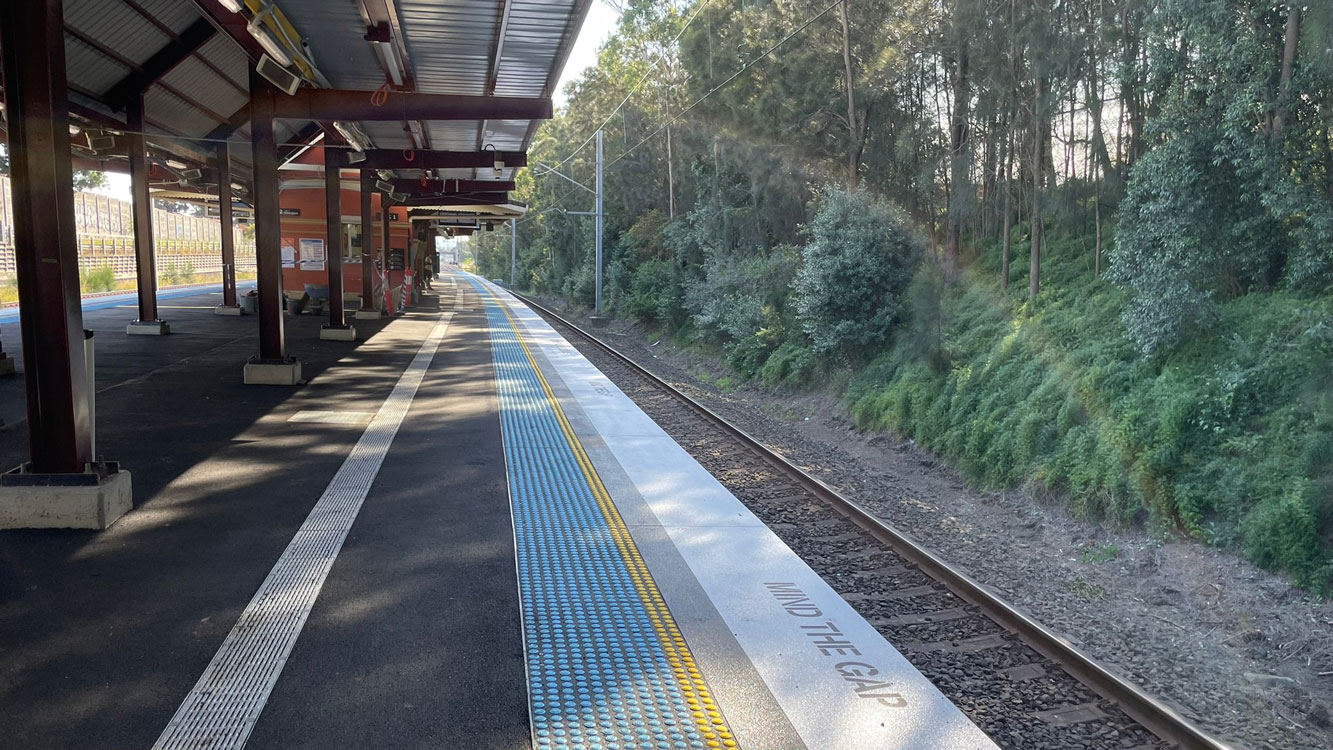
The upgrade of Chester Hill Station forms part of Transport for New South Wales’ $800.7 million Safe Accessible Transport Program, a state-wide initiative to deliver safer, more inclusive and accessible public transport.
Delivered through the Transport for Tomorrow (TfT) programme (a partnership between Transport for NSW, Laing O’Rourke and KBR) the project contributed to a coordinated programme of accessibility improvements across Western Sydney. In operation since 1924, Chester Hill is a heritage-listed station serving more than 1,000 passengers daily. The upgrade required the integration of modern accessibility standards within an ageing asset, while maintaining safe operations throughout construction.
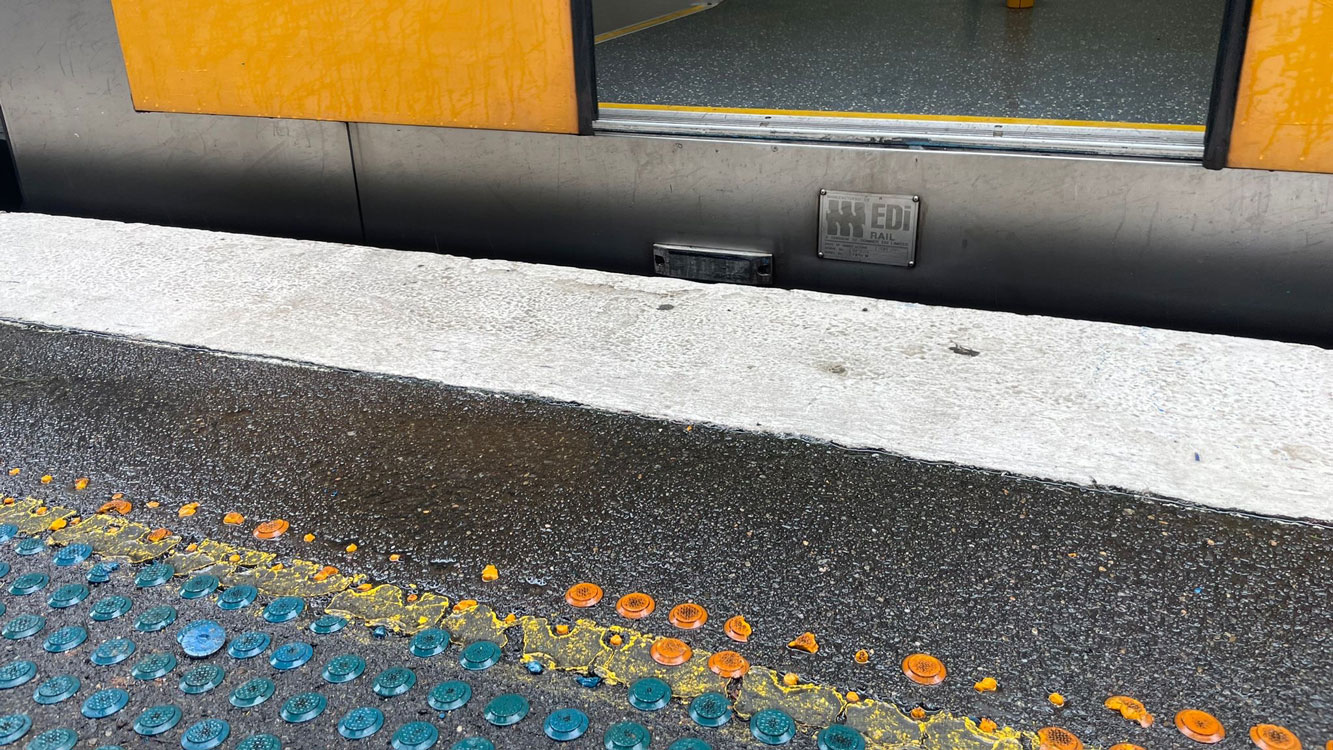
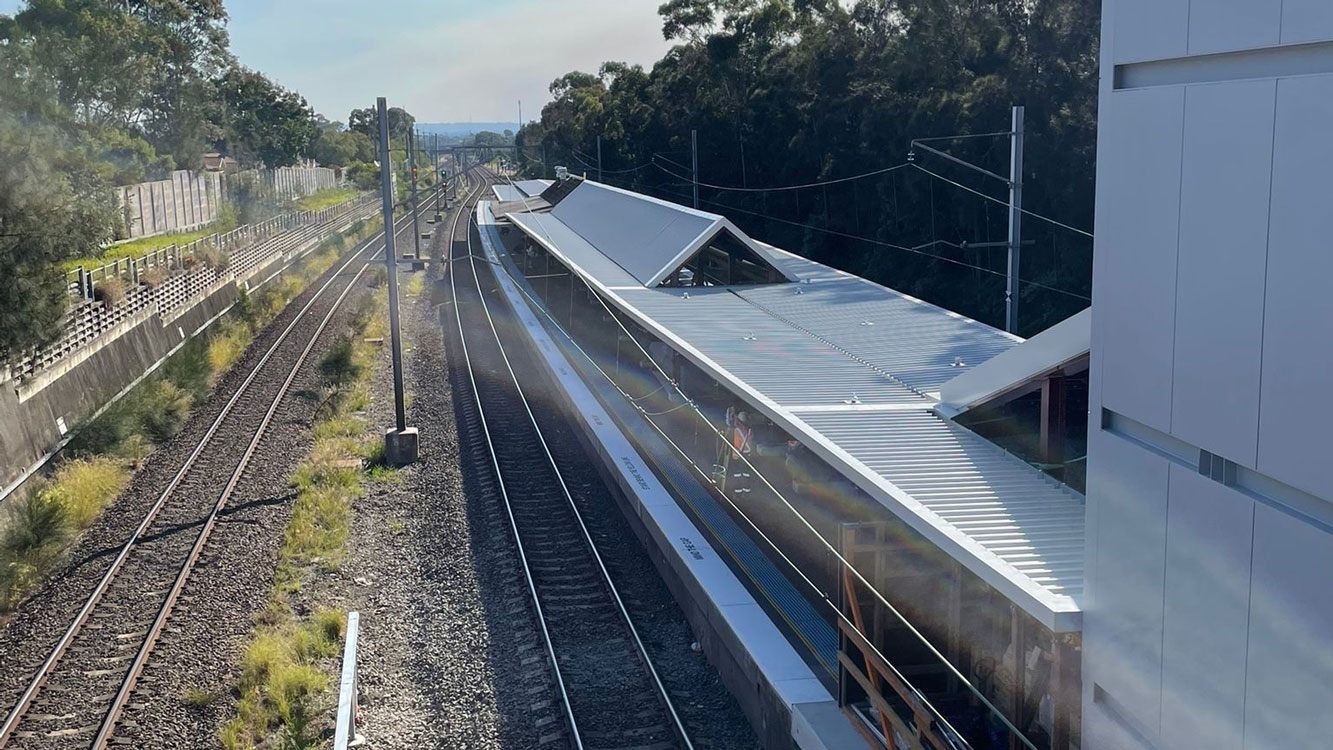
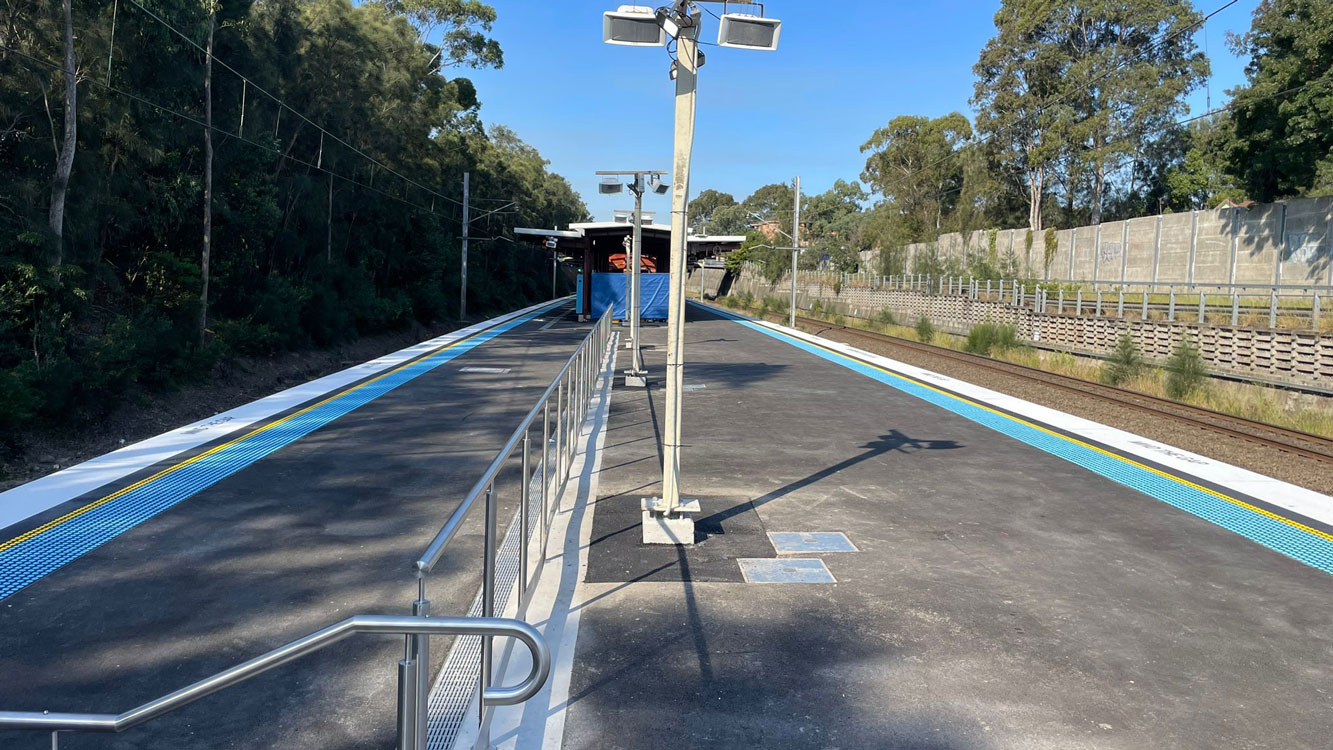
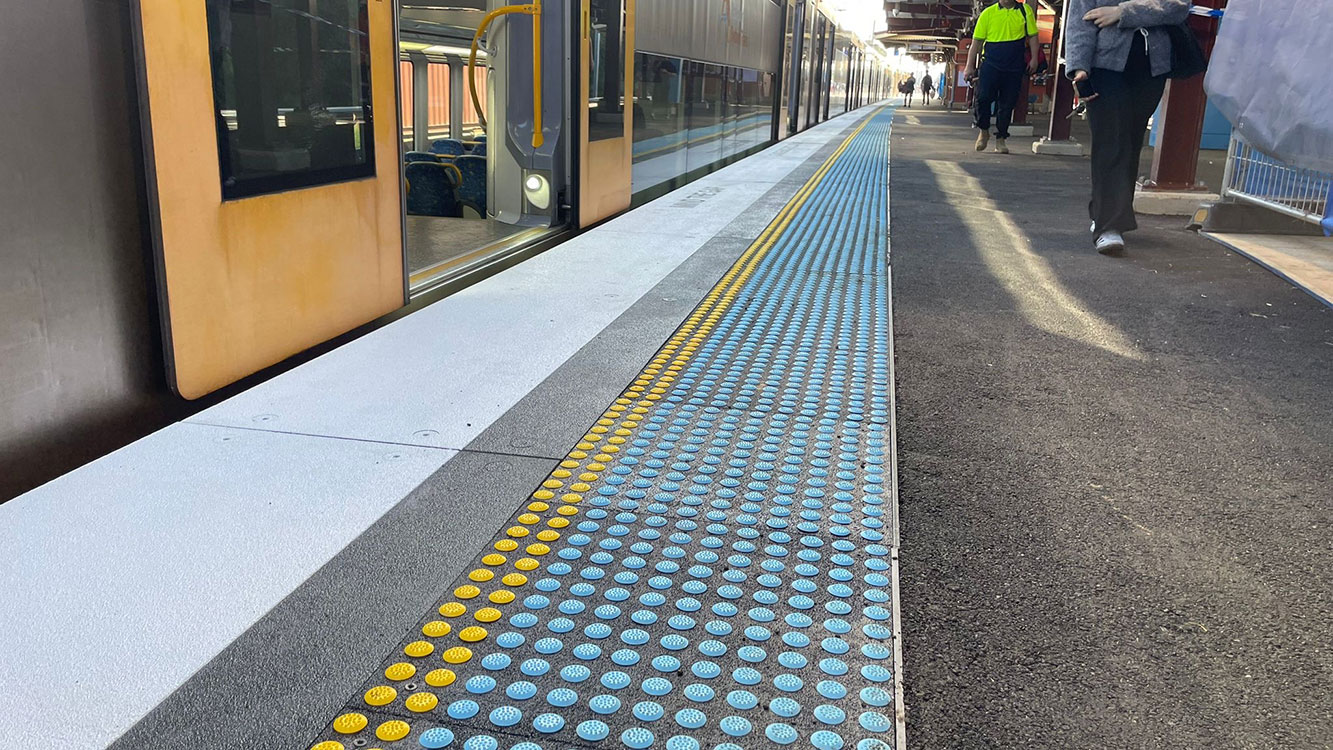
By utilising Dura’s modular solution, the project team avoided a full platform reconstruction, saving an estimated AUD $5 million and approximately 18 months of additional construction time. The station upgrade was delivered ahead of schedule and under budget, while also improving accessibility through a reduced platform-to-train gap for wheelchair users, parents with prams and passengers with mobility challenges.
Delivering Accessibility Through Transport for Tomorrow
At Chester Hill, TfT is delivering a coordinated package of improvements, including:
- Platform regrading and levelling
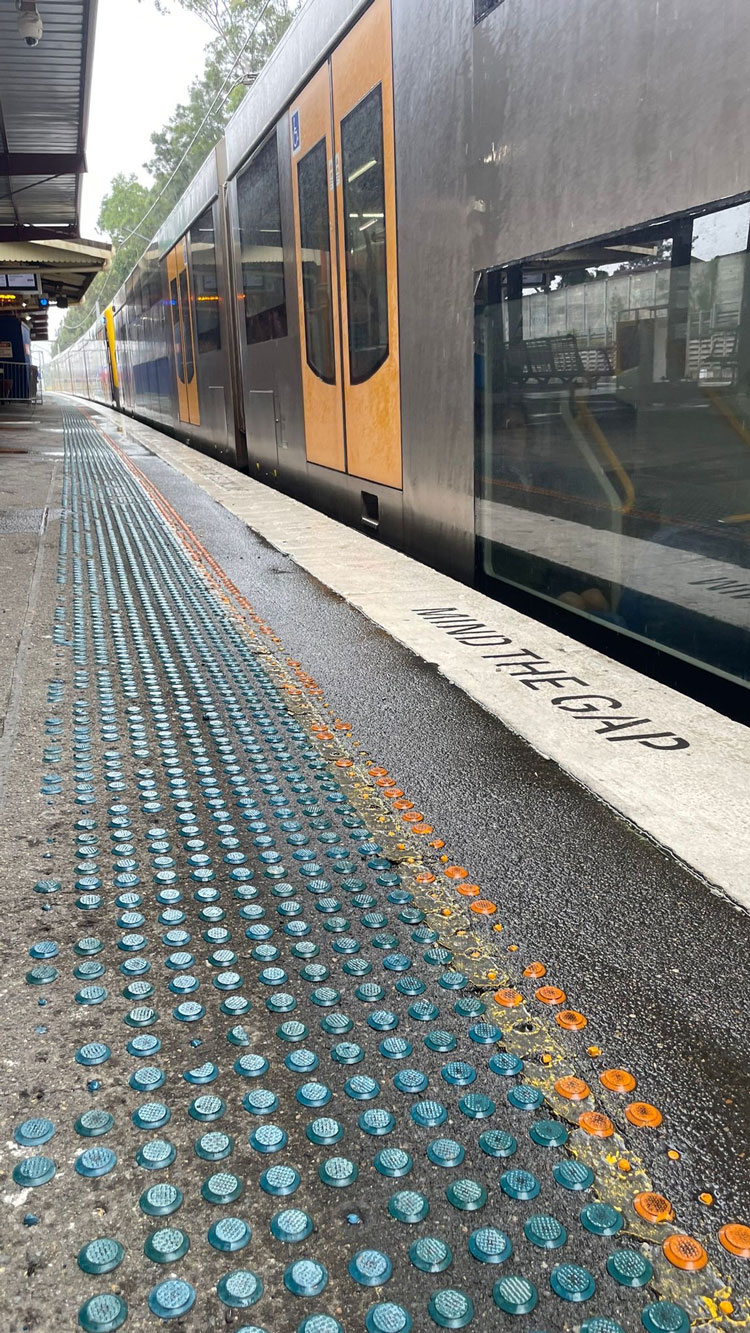
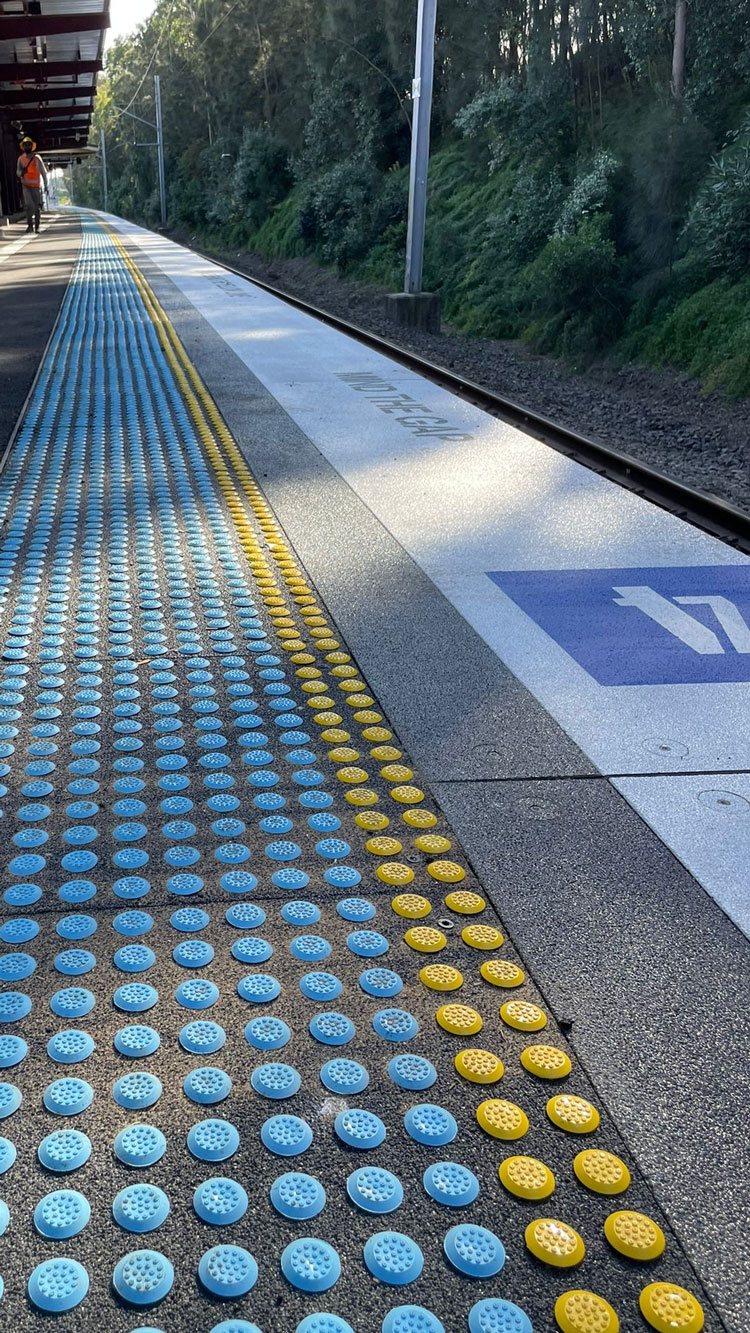
- Installation of compliant tactile ground surface indicators (TGSIs)
- New lift access and improved station connectivity
- Enhanced safety, wayfinding and passenger facilities
These works support compliance with the Disability Standards for Accessible Public Transport (DSAPT) and improve accessibility for all users, including passengers with reduced mobility, prams and luggage.
A Modern Platform Solution for a Constrained Island Platform
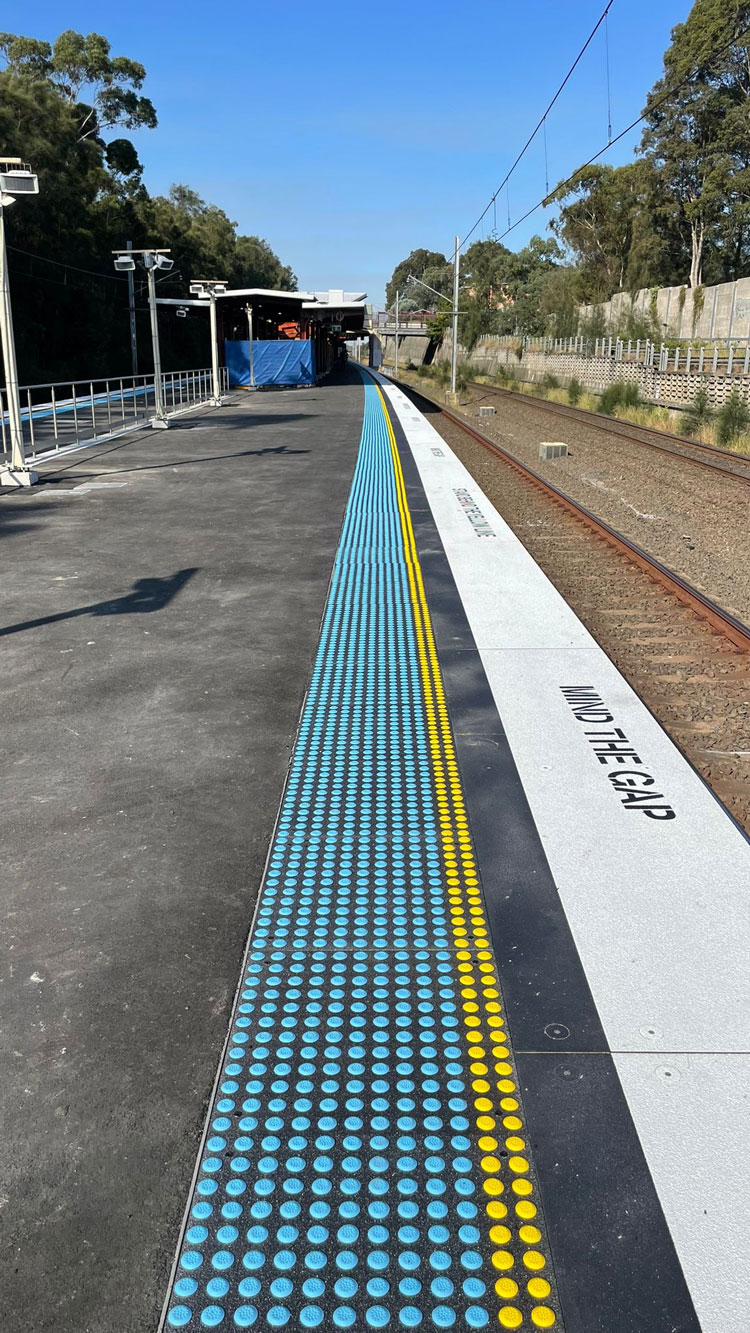
The station’s island platform configuration, with two platforms each measuring 162 metres in length and 1.4 metres in width, introduced a number of technical and operational challenges:
- Elevated Platform–Train Interface (PTI) risk requiring precise correction
- Uneven, ageing surfaces affecting accessibility and safety
- Heritage constraints limiting intrusive construction methods
- Restricted access windows within a live railway
- The need to minimise disruption to passengers
Traditional approaches—based on excavation, in-situ concrete and individually drilled tactiles—would have materially increased programme duration, noise and long-term maintenance requirements.
Dura Composites Australia addressed these challenges through the design and supply of a Dura Platform 40 modular GRP overlay system, tailored to the station geometry and compliance requirements.
Rapid Installation with Long-Term Performance
Dura Platform 40 provides a lightweight, modular and adjustable solution capable of delivering:
- Accurate PTI correction, improving stepping distances and passenger safety
- Controlled crossfall gradients to reduce the risk of wheeled items moving toward the track
- Efficient installation within limited possession windows
The modular system can be rapidly installed within tight possession windows and enables precise levelling across uneven substrates and allows for future adjustment, supporting evolving rolling stock interfaces and accessibility standards.
A New Approach to Tactiles
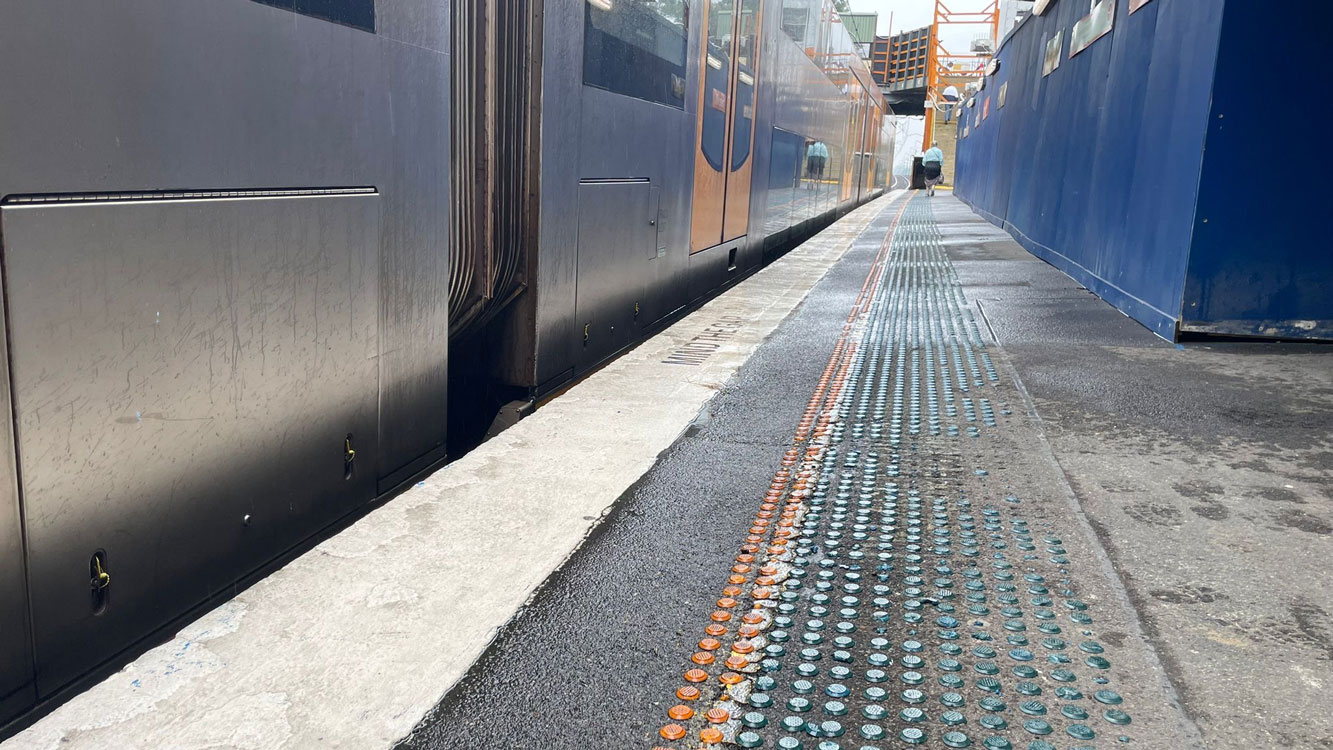
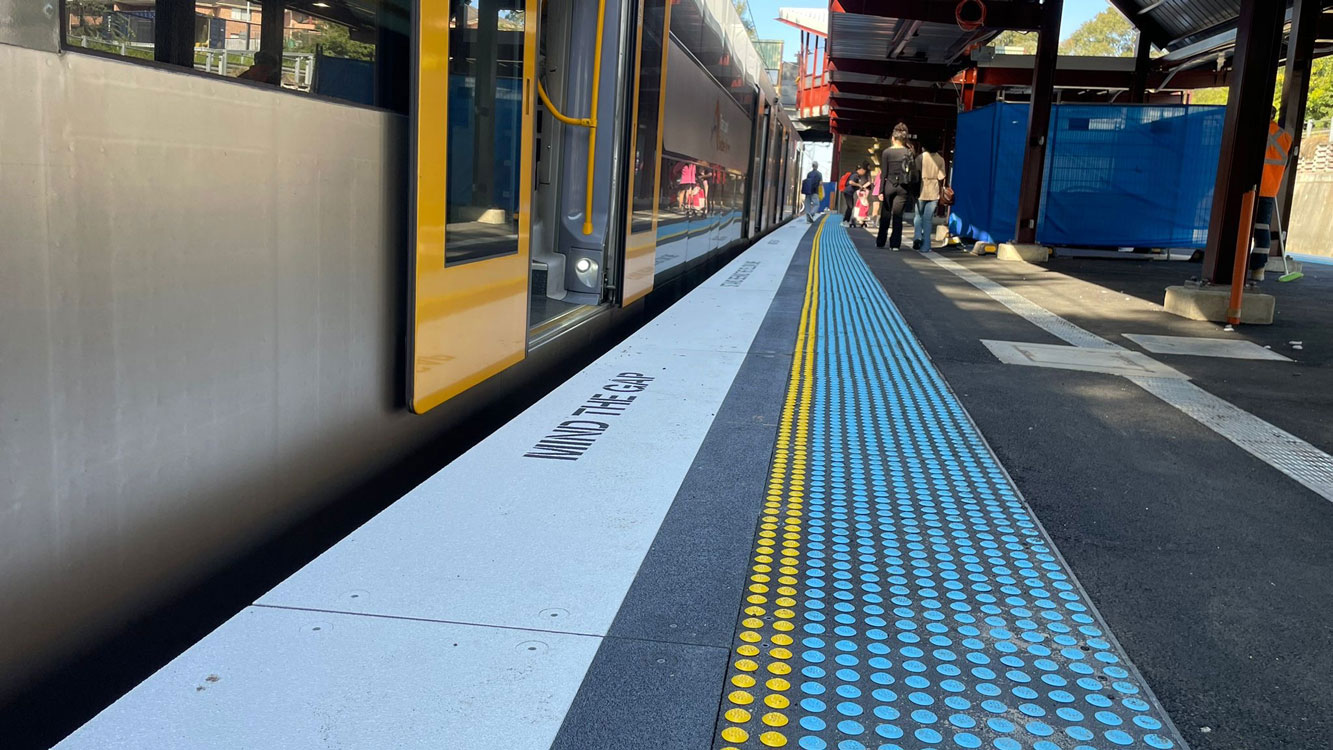
Tactile Ground Surface Indicators (TGSIs) are critical in defining platform edge zones and supporting safe navigation, particularly for passengers with vision impairment.
A key innovation at Chester Hill is the deployment of a next-generation GRP tactile system, developed by Dura Composites following the successful introduction of Dura Platform 40 at Victoria Street Station in 2019.
A typical NSW platform can contain over 50,000 tactile indicators, with traditional installation involving individually drilled and fixed units. Over time, these can become dislodged, leaving embedded remnants that complicate replacement and maintenance.
Dura Composites’ Innovative Solution
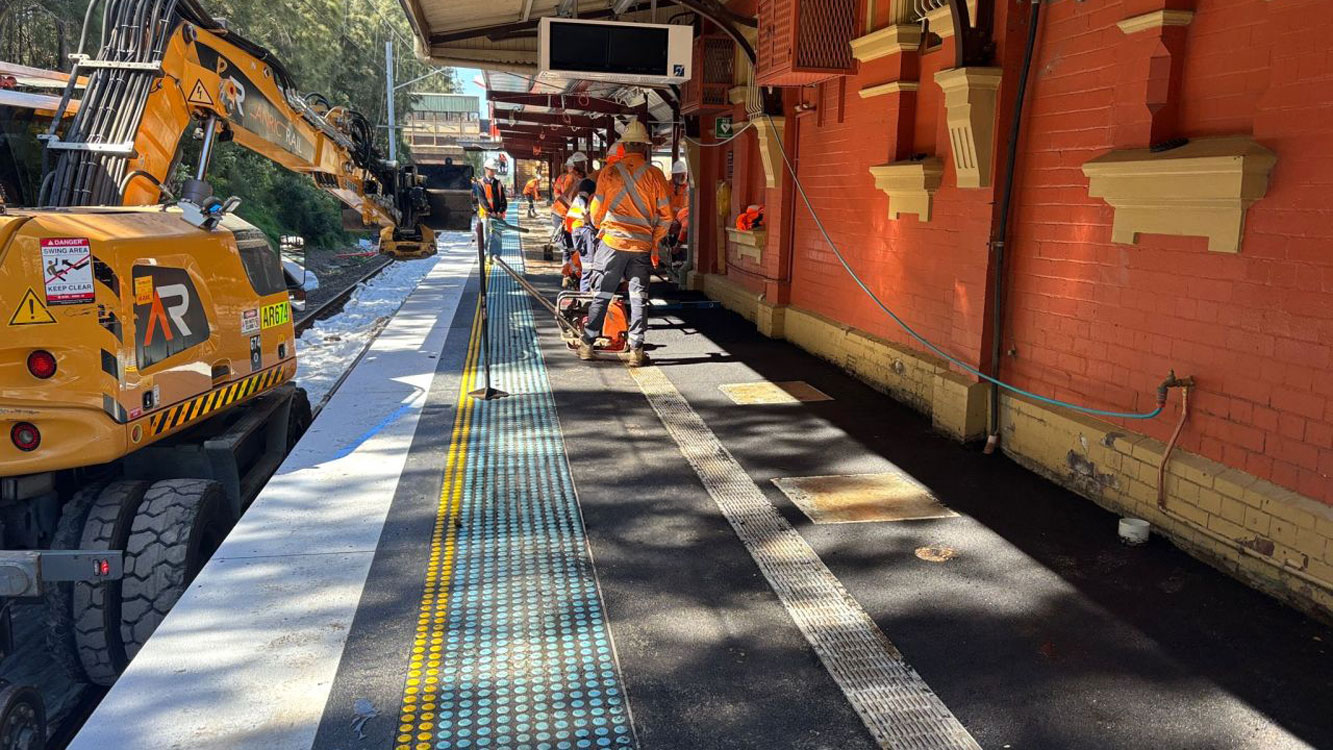
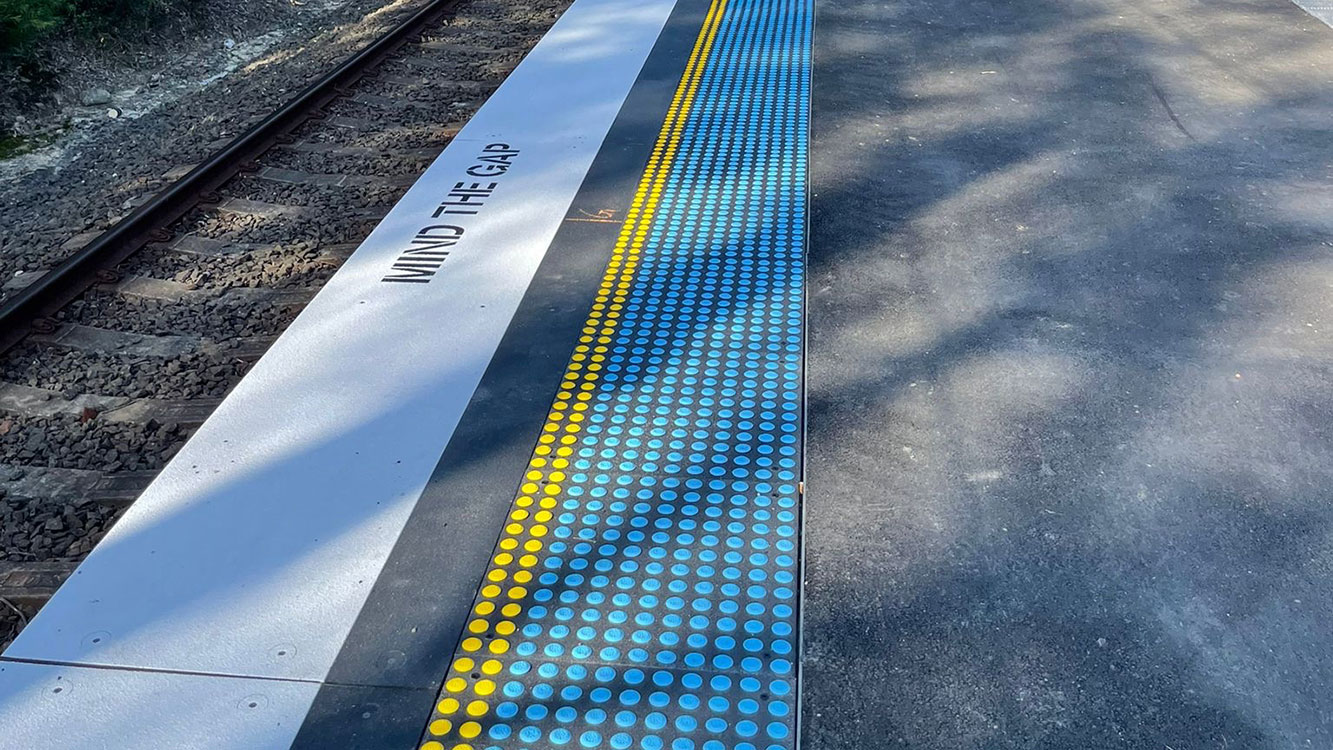
At Chester Hill, Tactile Ground Surface Indicators are integrated into 600 × 600 mm GRP Dura Platform tactile tiles, pre-engineered to accept Australian-compliant tactile nodules.
- 540 GRP tactile tiles installed
- 77,760 compliant TGSIs incorporated
- Installation completed without intrusive methods
As part of the tactile system delivery, the TGSIs were pre-installed by members of Flagstaff Group, an Australian disability enterprise providing supported employment and training opportunities for people with disabilities.
This collaboration ensured consistent quality while contributing to a critical safety feature. It also created meaningful employment opportunities, demonstrating how infrastructure projects can deliver wider social value alongside technical performance.
Maintenance & Lifecycle Benefits
- Simplified replacement (with individual tiles swapped out as needed if TGSIs become displaced)
- Reduced disruption for maintenance teams
- Ability to hold spare tiles in stock for rapid response
- Improved durability in high-traffic environments
This approach reduces whole-life maintenance requirements while supporting long-term safety and reliability.
Efficient Delivery in a Live Rail Environment
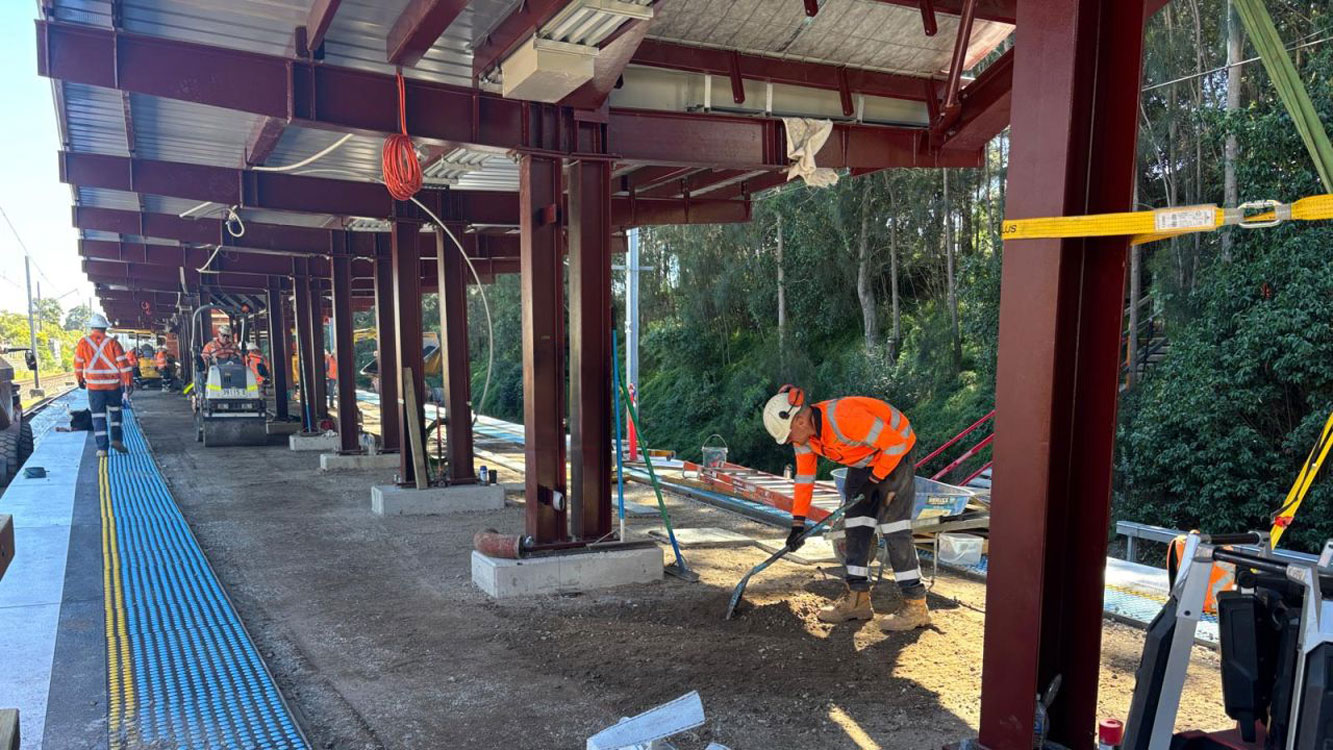
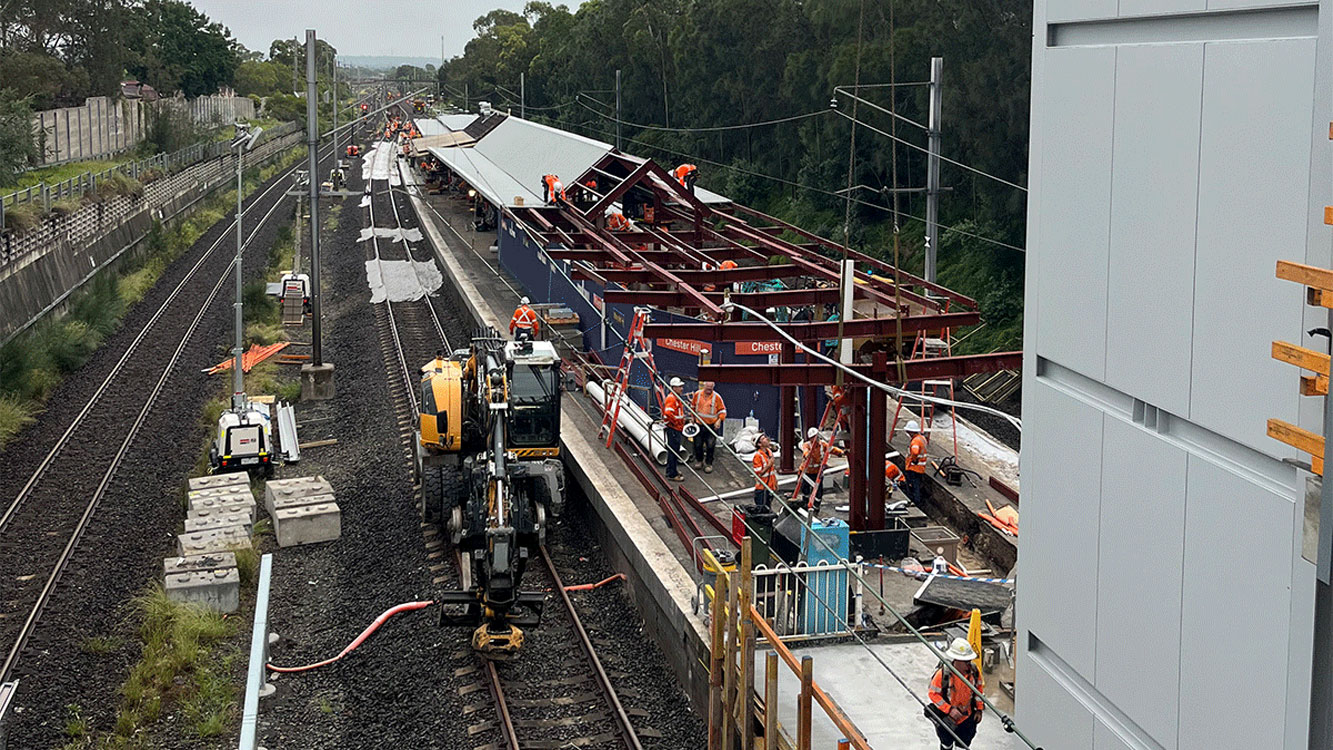
Working in partnership with Gartner Rose, a TAO-accredited contractor with over 30 years’ rail experience, the project has demonstrated safe and effective delivery within a live operational railway.
Kilmac Civil were appointed to deliver the platform installation which was completed across two possession windows, six weeks apart, enabling a phased and controlled approach to delivery.
During each possession, all Dura Platform 40 panels (including integrated tactile panels) were installed within the first 36 hours, maximising productivity within limited access windows.
Following panel installation, final works were limited to backfilling up to the pre-installed FRP angle using asphalt, enabling efficient completion with minimal additional intervention.
- Delivered during WE35 possession window
- Over 2,500 hours worked across a two-day period
- Zero incidents or injuries recorded
This approach highlights how modular platform systems can accelerate installation, reduce programme risk, and support efficient coordination with follow-on civils activities.
Proven Approach: From Victoria Street to Chester Hill
The Chester Hill solution builds on the proven success of Dura Platform 40 at Victoria Street Station (NSW, 2019).
At Victoria Street, a 45-metre raised platform section was delivered to address PTI risk and uneven infrastructure. The modular system enabled rapid installation, accurate levelling and compliant drainage within tight access windows.
The continued performance of the Victoria Street installation has provided confidence in the durability and reliability of the Dura Composites system, directly informing the evolved solution deployed at Chester Hill.
Supporting Sustainability and Network Objectives
The use of a lightweight GRP Dura Platform systems supports Transport for NSW’s broader objectives by:
- Reducing excavation and material volumes
- Minimising on-site waste and rework
- Lowering installation impact within constrained environments
- Supporting efficient logistics and reduced disruption
The modular approach also aligns with a whole-life asset strategy, reducing future maintenance interventions and associated operational disruption.
Results and Impact
- First modular platform system installed on the Sydney Trains network
- Reduced platform-to-train gap, improving accessibility for passengers
- Avoided a full platform reconstruction programme
- Estimated AU$5 million saved in additional construction costs
- Approximately 18 months saved compared with a traditional platform rebuild
- Project delivered ahead of schedule and under budget
- Reduced installation disruption through modular, lightweight construction
- Simplified long-term maintenance through replaceable tactile system
- Safe delivery within possession windows with zero incidents recorded
- Reduced excavation and improved material efficiency
- Future-ready platform system adaptable to evolving network requirements
Testimonials
Chester Hill demonstrates how modern platform solutions can address long-standing accessibility and PTI challenges in a controlled and practical way. By combining modular platform design with an evolved tactile system, we’ve supported a solution that improves passenger safety while simplifying installation and long-term maintenance.
Chris Meikle, Dura Composites Australia
I am delighted that the NSW Labor Government has delivered this important upgrade to Chester Hill Station in its first term. This investment will make a real difference to the everyday lives of local residents, particularly people with disability, older residents and families with young children. Everyone deserves to be able to use our public transport network safely and with confidence. These upgrades will make Chester Hill Station safer, more accessible and easier to use, delivering the modern and inclusive transport infrastructure our community deserves.
Member for Auburn Lynda Voltz